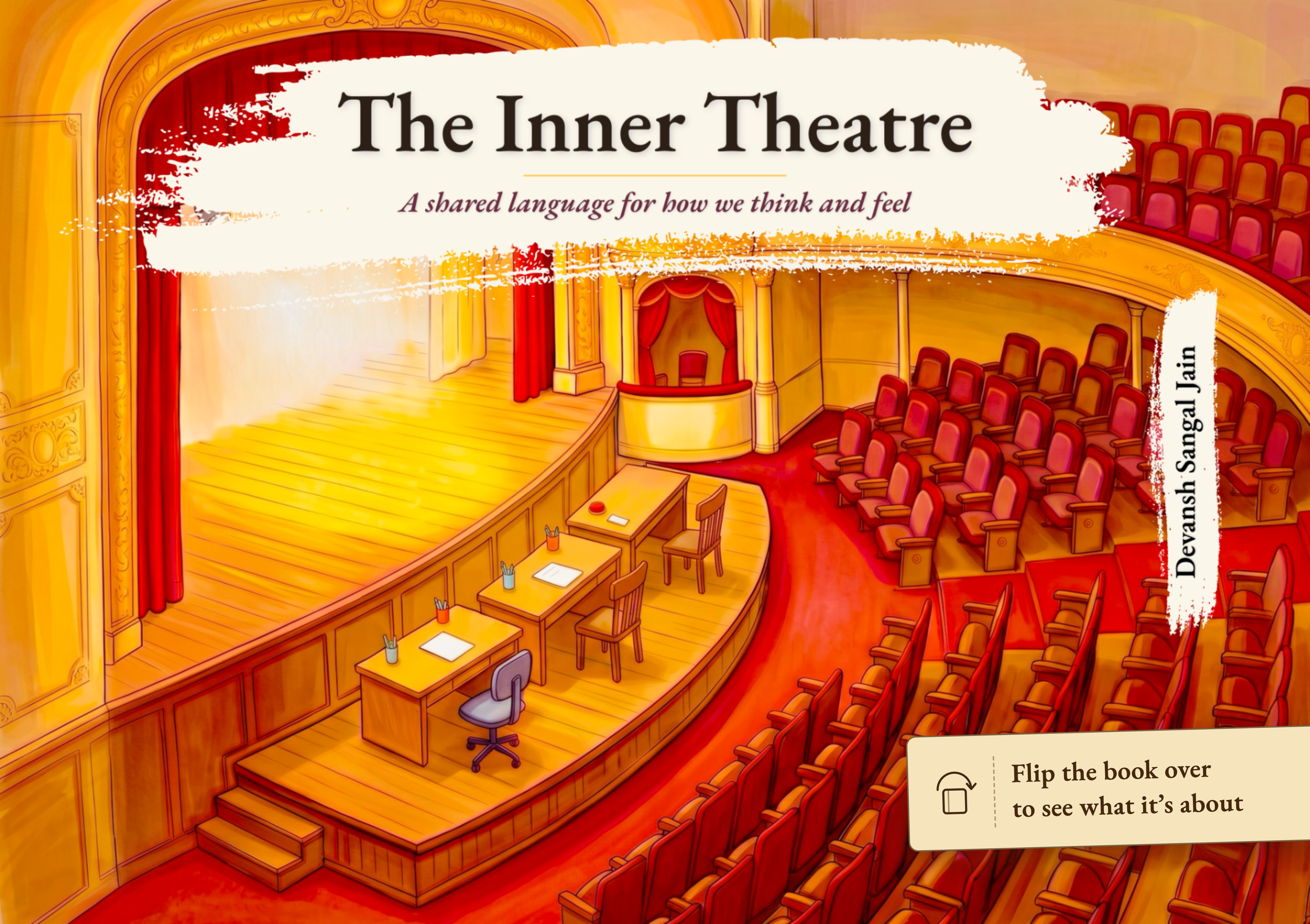
The Inner Theatre — A shared language for how we think and feel

The Inner Theatre, Book 1 — front cover.

We can’t solve a problem we can’t describe.

A rich language exists for the external world, but we lack a shared language for what happens within us.

This book introduces a language to talk about who all live inside us, and how they shape the way we think and act.

For example, the language allows us to see how we mix up what happened and what we felt into a single story.

I didn't get the jobWhat happened
+
I'm sad / disappointedWhat we felt
=
“I'm a failure”The story we told
A friend cancelled plansWhat happened
+
I'm hurt / angryWhat we felt
=
“They're a bad friend”The story we told

How it works
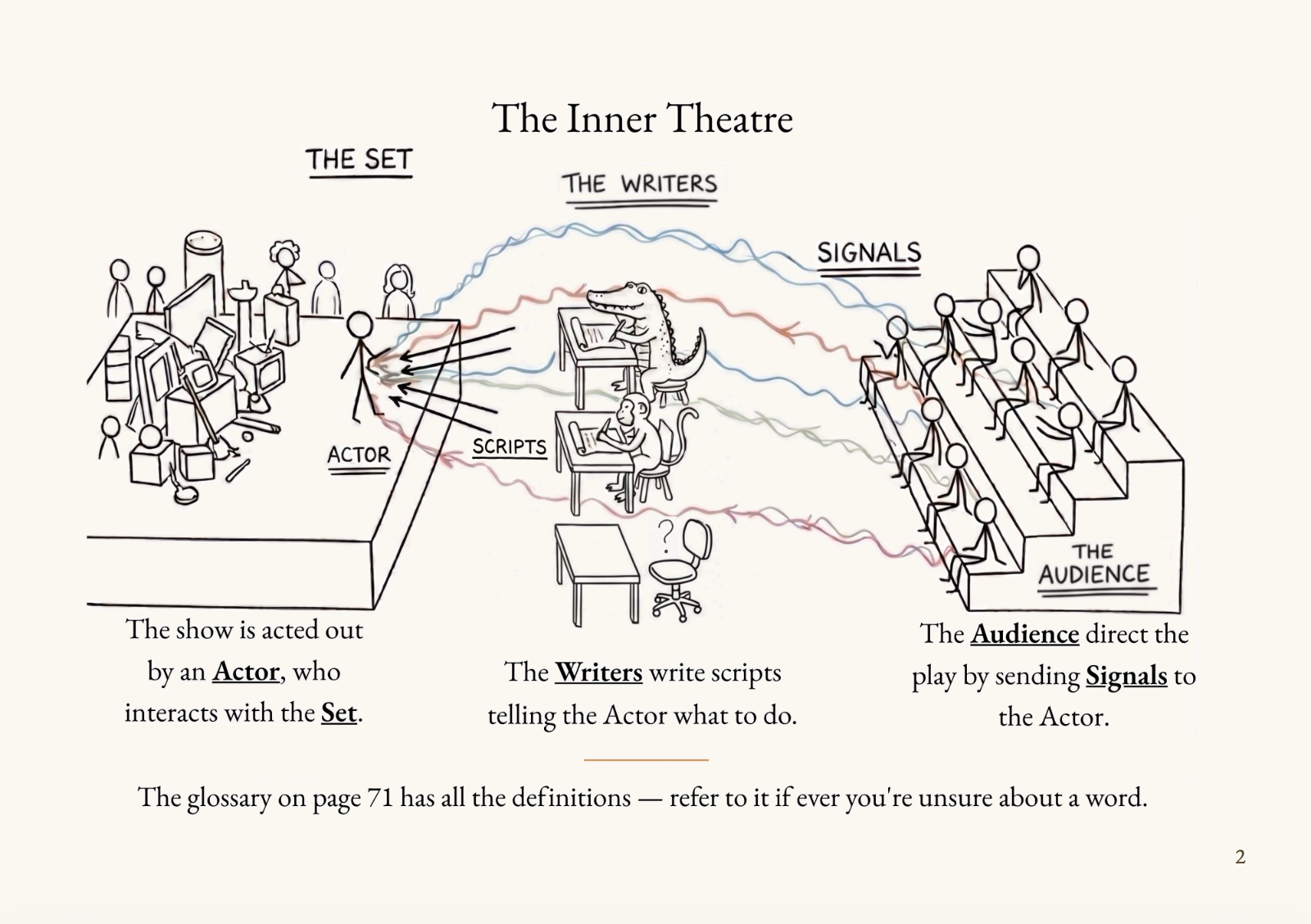
A page from The Inner Theatre showing the Actor, the Writers, Signals, and the Audience — the whole mechanism at a glance.
The Inner Theatre, at a glance
The Actor is our physical body, interacting with the world around us.
The Writers are the different ways our mind works.
Signals are our feelings.
The Audience is our needs.
The Writers
The Croc, the book's safety officer.

The Croc's job is to keep the Actor and the Audience safe. He becomes active if he senses a threat — and does it by writing fight, flight, or freeze scripts.
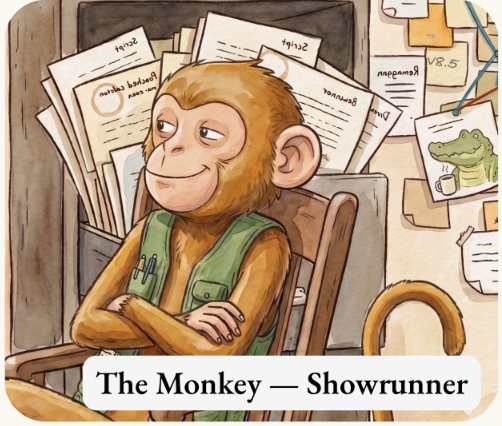
The Monkey, the book's showrunner.

The Monkey's job is to write scripts that keep the Croc calm. He's always active, constantly reusing and adapting past scripts to explain the present.

The Signals
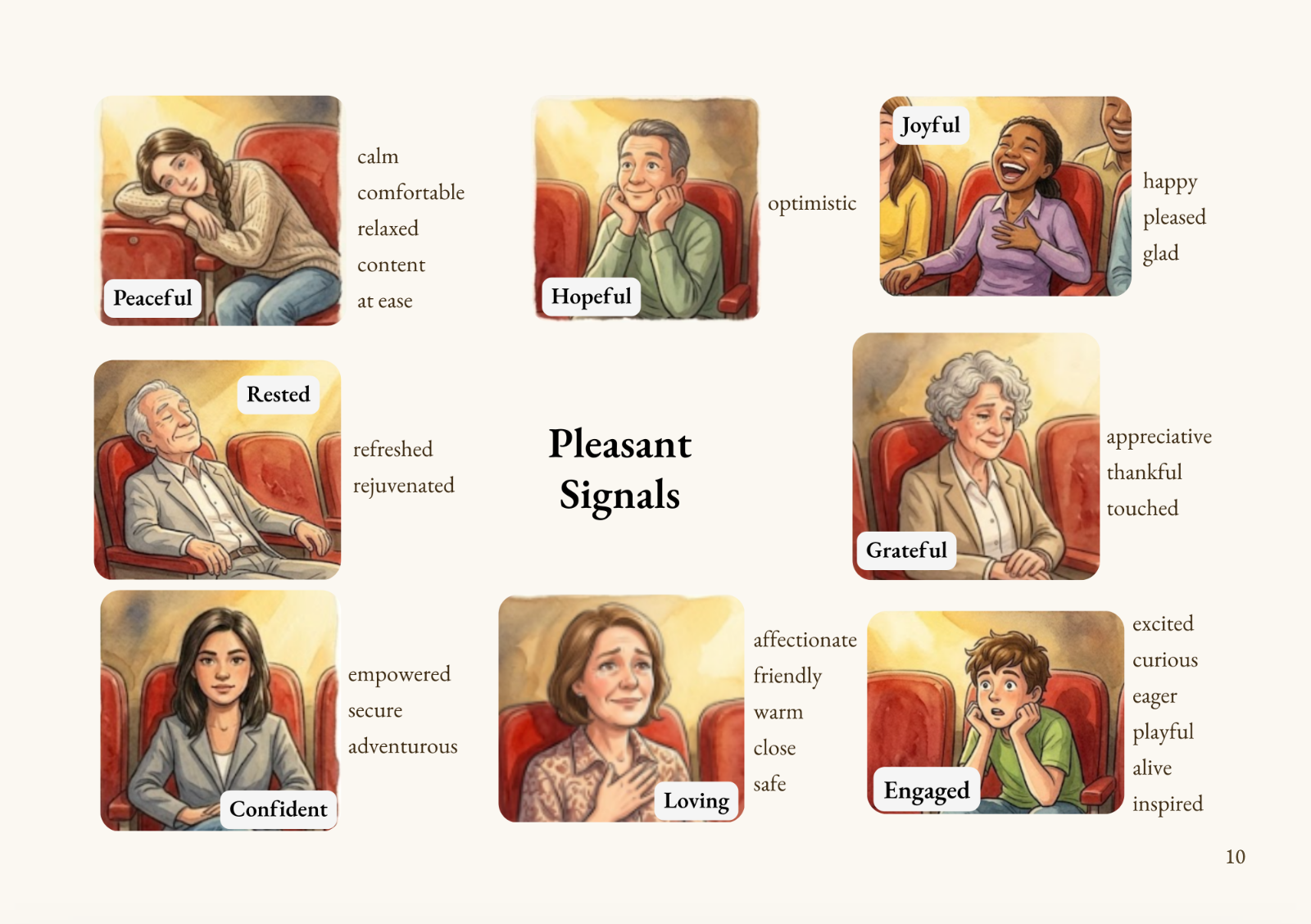
A page from The Inner Theatre showing Pleasant Signals — a vocabulary for feelings like peaceful, hopeful, joyful, grateful, confident, loving, engaged.
Pleasant Signals
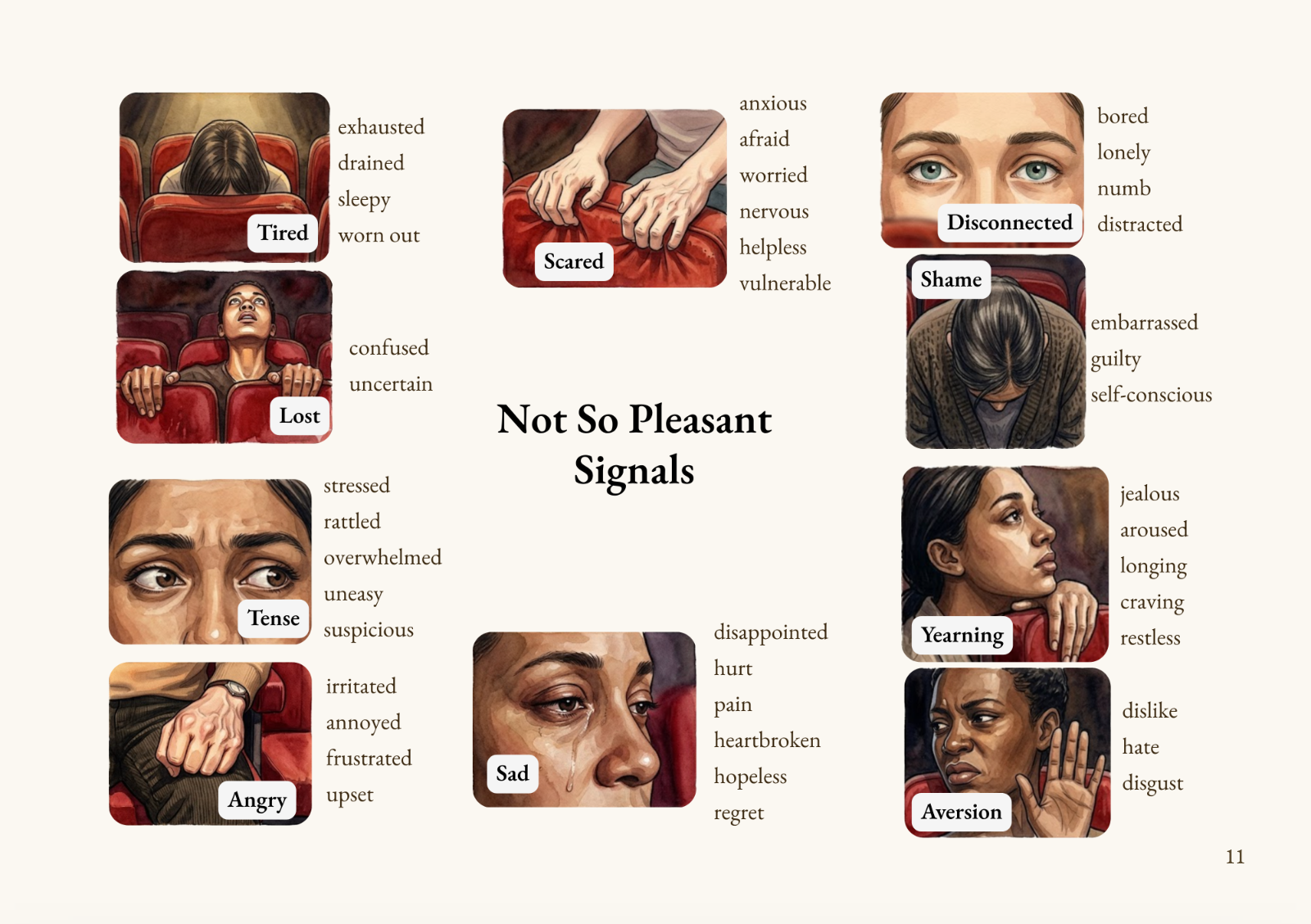
A page from The Inner Theatre showing Not So Pleasant Signals — a vocabulary for feelings like tired, lost, tense, angry, scared, disconnected, shame.
Not So Pleasant Signals
The Audience
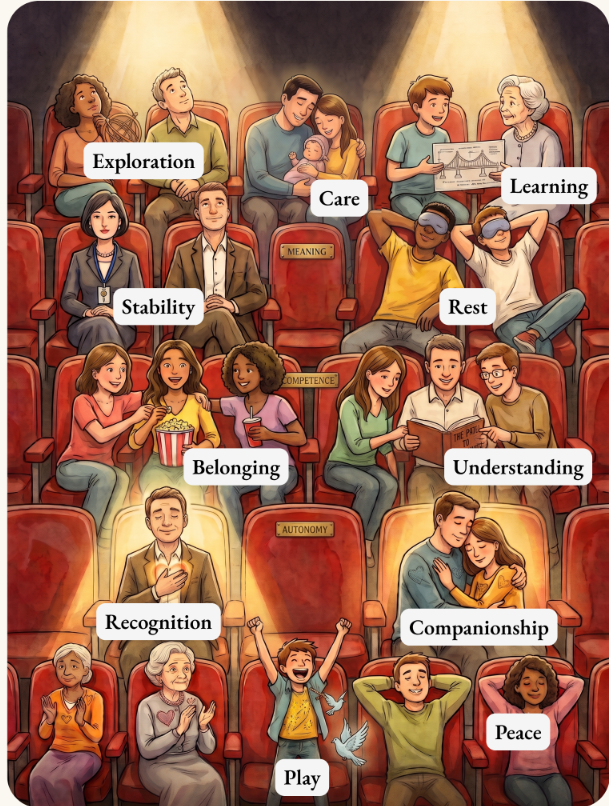
A page from The Inner Theatre showing groups of Audience members in a theatre: Exploration, Care, Learning, Stability, Rest, Belonging, Understanding, Recognition, Companionship, Play, Peace.
Some of the Audience members

We use this metaphor because it allows us to talk about how these parts interact with each other, with specificity, and without blame.

This allows us to work backward from a story, to recognize and connect with parts of us that too often go unacknowledged, and unheard.

The story“My friend doesn't care about me”→
What happenedA friend texted an hour before dinner saying they couldn't make it
+
What we feltDisappointed, upset
+
What we neededSupport — someone to talk to about our frustrating week

The story“The city is run by fools”→
What happenedI was stuck in traffic for three hours on my way home from work
+
What we feltAngry, frustrated
+
What we neededOrder and competence — the day to go as expected, and the people responsible for the roads to do their job
What this makes possible

Built on Nonviolent Communication and Internal Family Systems, the language of the Inner Theatre is a foundation for understanding ourselves, and working towards what we truly want in life.

Buy on Amazon